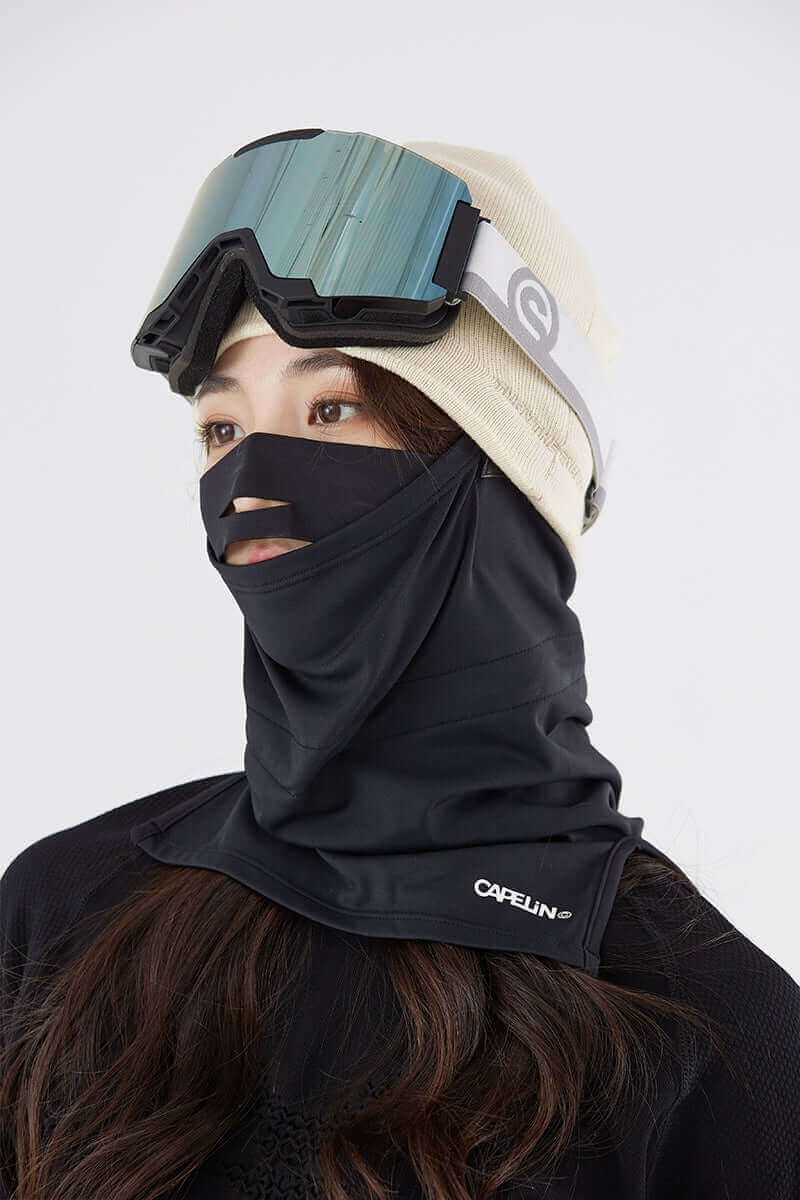
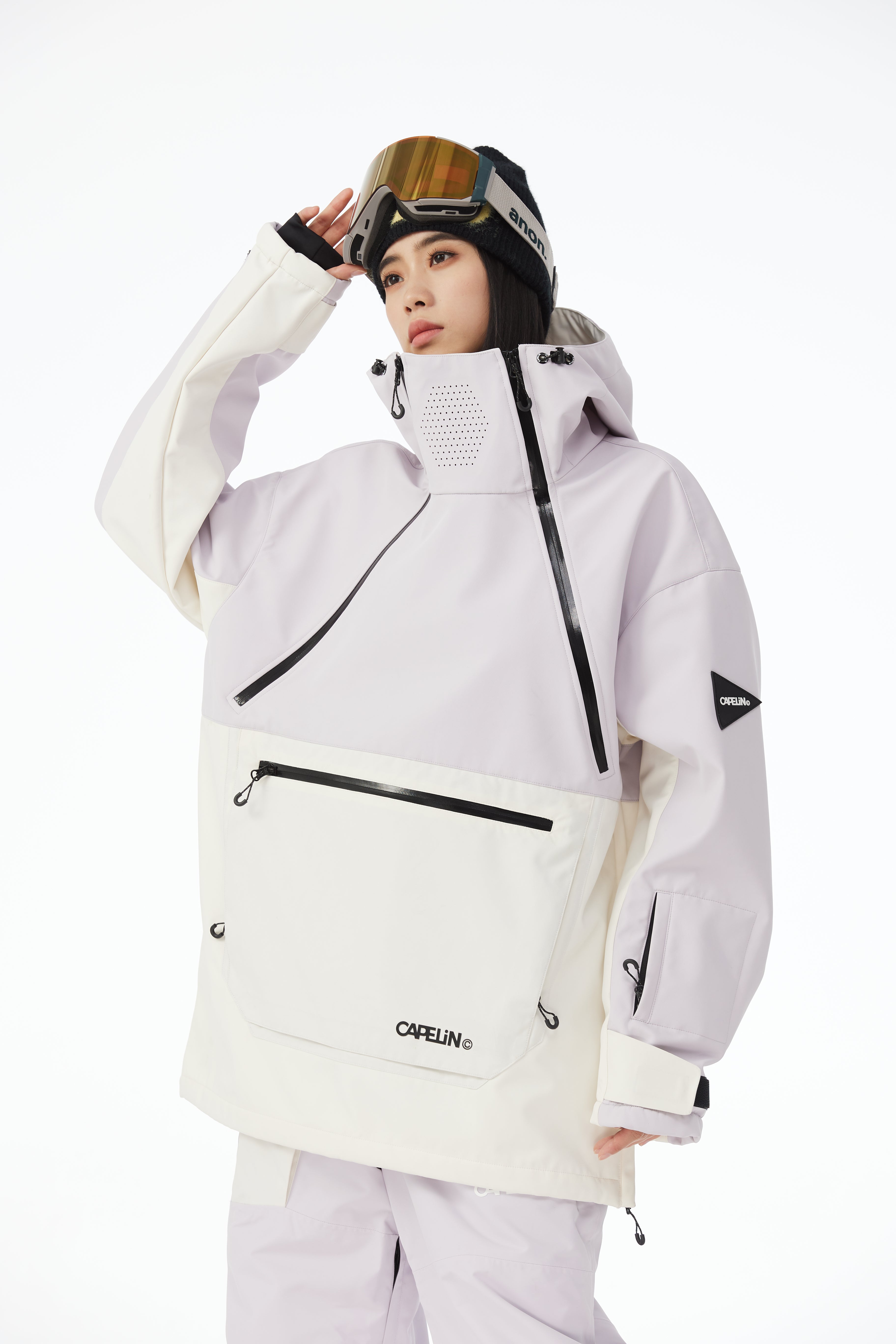
For skiers who are used to wearing prescription glasses, getting ready before each trip to the slopes feels like a small ritual. Whether a pair of glasses can sit comfortably beneath a snugly fitted snow goggle is not just about visual clarity—it directly affects safety and peace of mind during the ride. This is not a simple "yes" or "no" question, but rather a systematic coordination effort that involves everything from helmets and goggles to the collar of your snowboard jacket.
🔽 Quick Navigation
- 📌 A Real-Life Story: Mark Henderson's Close Call on the Mountain
- 📌 On Wearing Prescription Glasses Under Snow Goggles
- 📌 On Wearing Contact Lenses as an Alternative
- 📌 How Snow Goggles and Snowboard Jackets Work Together
- 🧭 Conclusion
- ❓FAQ
A Real-Life Story: Mark Henderson's Close Call on the Mountain
A few years ago, Mark Henderson, an experienced skier from Colorado with over fifteen years on the snow, had a frightening incident at Jackson Hole Ski Resort. Mark was accustomed to wearing thick plastic-framed glasses on a daily basis. During a family winter trip, he casually put an ordinary pair of snow goggles over his glasses. Everything seemed fine at first, but while carving hard through a steep section at high speed, the tight goggle frame pressed mercilessly against his glasses' temples, causing a sharp, piercing pain around his temples. Worse still, the intense physical exertion produced heat that had nowhere to escape, and in an instant, the inside of his lenses fogged up completely. He lost nearly all visibility and would have crashed into a warning sign at the side of the trail if he hadn't slowed down and pulled over in time. This frightening experience pushed Mark to dig deep into the equipment logic for "eyewear-dependent" skiers. He came to realize that the core issue wasn't about hiding the glasses away—it was about making the helmet, goggles, face mask, and the collar of the ski jacket work together as a harmonious system that doesn't interfere with each other.
On Wearing Prescription Glasses Under Snow Goggles

If you plan to keep your prescription glasses on underneath your snow goggles, you first need to tackle two major challenges: physical space constraints and temperature-difference fogging. Here are a few practical suggestions to consider:
-
Leave enough internal depth. Choose snow goggle models with wider horizontal frames or spherical lens designs that can buy you more clearance around the bridge of your nose, preventing the goggle frame from pinching the arms of your glasses into your temples. Also pay attention to the internal depth of the goggle—make sure there is enough room to accommodate the curvature of your prescription lenses without them pressing against your eyelashes.
-
Equalize lens temperatures in advance. Once you arrive at the resort, try to place both your snow goggles and your glasses outside in the open air for a while before putting them on, allowing the lenses of both to reach a similar temperature. This simple step significantly reduces the rapid condensation caused by a sharp temperature difference.
-
Keep the ventilation ports clear. Make sure the top and bottom air vents of your snow goggles are not blocked by snow or by your face mask fabric. Good airflow circulation helps carry away the warm, humid air trapped inside the goggle chamber, lowering the chance of fog development.
-
Avoid taking your goggles on and off repeatedly. Try not to push your snow goggles up onto your helmet and then pull them back down over your eyes over and over. This sudden, repeated temperature shift accelerates moisture buildup. If fog does form on the inside of the lens, never wipe it with your fingers or clothing—that will damage the anti-fog coating and scratch your field of view. Instead, let it air-dry naturally or move to a warmer area and allow the fog to dissipate slowly.
On Wearing Contact Lenses as an Alternative

For skiers who are already comfortable wearing contact lenses on a regular basis, this is practically the quickest way to sidestep the compatibility issue altogether. Once you remove your prescription glasses, you are free to choose any snow goggle model without worrying about temple pressure, and both facial fit and peripheral vision can reach their optimal state. However, the extremely dry and windy conditions at high-altitude ski resorts are not particularly kind to contact lenses, so a few extra precautions are worth taking:
-
Prevent lenses from drying out. Contact lenses tend to lose moisture quickly due to rapid tear evaporation, which can cause dryness, irritation, or even displacement and loss. Carry a small bottle of rewetting drops specifically designed for contact lenses in your pocket, and apply them while on the chairlift or during breaks to keep your eyes comfortable.
-
Carry spare lenses in your backpack. Keep at least one pair of daily disposable lenses in your backpack as an emergency backup. If you lose a lens mid-run because of rubbing your eye or gusty wind, you can swap in a fresh pair immediately rather than struggling through the rest of the day with blurry vision.
-
Pay attention to hygiene. Washing facilities on the mountain are often limited. Before touching your contact lenses, be sure to clean your hands with hand sanitizer, or perform any lens handling inside a clean indoor space to avoid eye infections.
How Snow Goggles and Snowboard Jackets Work Together

Once the headwear is sorted out, the connection between your goggles and your body gear is just as important. The collar and hood design of your snowboard jacket directly affect how comfortably your snow goggles sit throughout the day. Here are the key points to keep in mind:
-
Collar height and softness matter. If your snowboard jacket has a stand-up collar that is too high and made of stiff fabric, it will push upward against the bottom edge of your goggles whenever you lift your head to read the terrain ahead. This breaks the airtight seal between the goggle and your face, allowing cold air to rush in or warm breath to backflow into the goggle chamber. The ideal collar should have a soft fleece lining on the inside and sit at just the right height—high enough to keep your chin warm but low enough to leave a comfortable gap for the lower rim of your goggles.
-
The hood needs sufficient room. The hood on your helmet-compatible jacket should have enough extra volume to accommodate your helmet without squeezing. An overly tight hood, when pulled up, applies inward pressure that transfers through the helmet and pushes against the goggle strap and the arms of your glasses, causing them to shift out of position constantly. Choosing a jacket with an adjustable hood or one made of stretchy fabric helps avoid this problem.
-
Get the dressing order right. The recommended sequence is this: put on your face mask first, then adjust your prescription glasses to the most stable and comfortable position. Next, put on your helmet, and then place your snow goggles over the front brim of the helmet. Finally, decide whether to pull up the jacket hood based on wind conditions. Following this order minimizes unnecessary friction and compression between all your gear, ensuring that every piece stays where it should be while you ride.
Conclusion
At the end of the day, glasses and snow goggles are not natural enemies. Whether you choose to keep your prescription glasses on for the sense of familiarity and security they provide, or switch to contact lenses in exchange for a wider, uninterrupted field of view, the real answer lies in planning ahead for physical compatibility between your equipment and paying attention to every tiny pressure point across your entire outfit. As Mark Henderson summed up after fine-tuning his own gear combination: "Once your glasses are no longer a burden, you realize that the true beauty of the slopes is about focusing on the arc beneath your feet—not the pressure on the bridge of your nose." Heading out with a clear view is far safer than stumbling through fog and blur.
FAQ
Q1: How should I choose snow goggle lens colors for sunny versus cloudy days when wearing prescription glasses?
Since your prescription glasses may have photochromic or anti-reflective coatings that interact with the goggle's light transmission, the combined effect matters. On bright, sunny days, go with dark or mirrored lenses to cut down glare. On overcast days, switch to yellow or lighter lenses for better contrast. If your glasses already change tint automatically, prioritize the goggle's visible light transmission rating as your primary reference.
Q2: What should I do with my glasses and snow goggles right after coming indoors at the end of the day?
Take off your goggles immediately once you're inside, but do not wipe the lenses right away. Let both your glasses and goggles warm up naturally at room temperature for about five to ten minutes, allowing surface moisture to evaporate on its own. Only after that, use a clean microfiber cloth to gently wipe them dry.