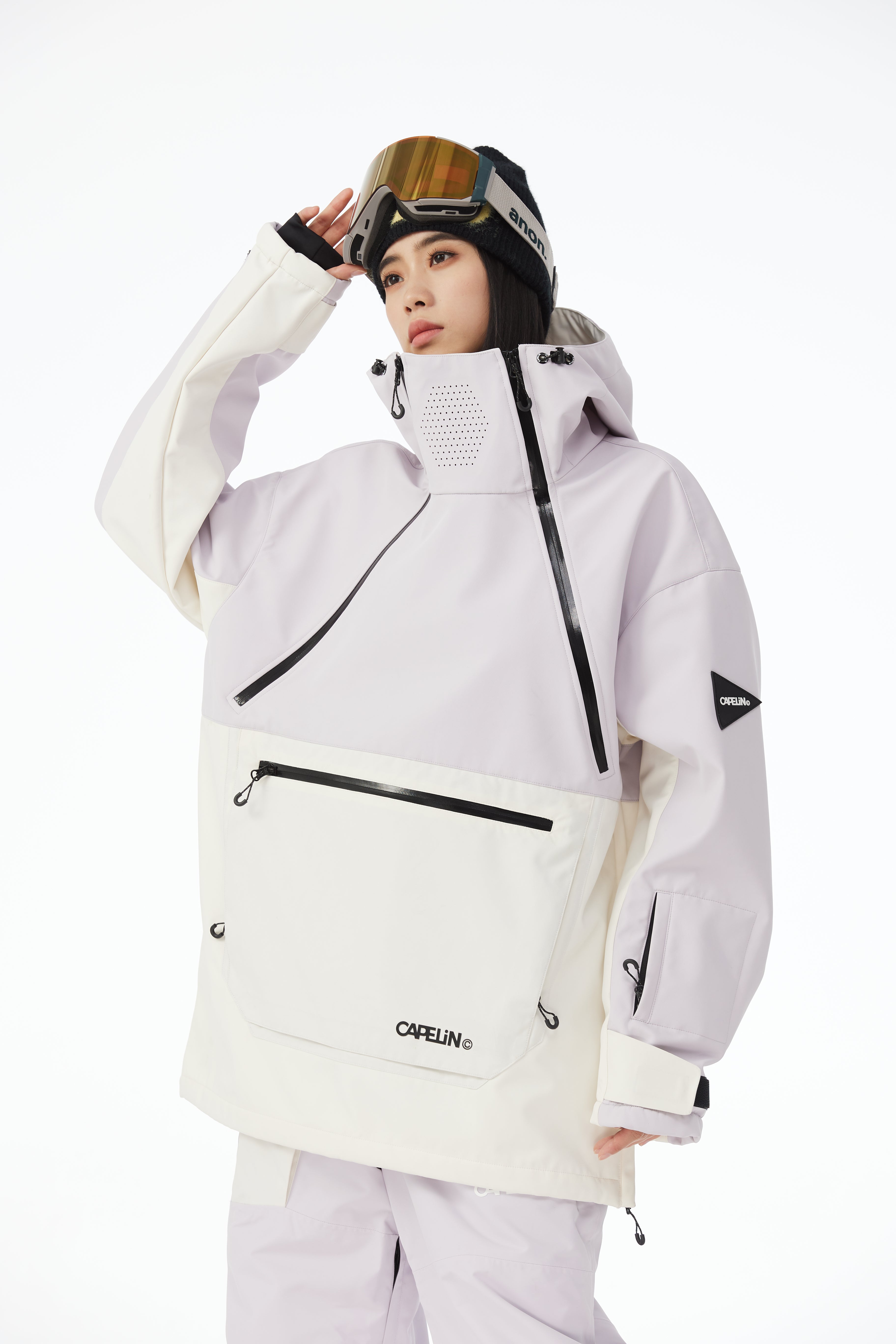
Walk through the base of any resort and you'll notice it: fewer full-zip shells, more riders in clean, hoodless-looking pullovers with a single diagonal zip across the chest. What used to be a niche, minimalist style has quietly become one of the fastest-growing categories in snowboard outerwear. It's not just a fashion shift — pullover construction solves a few practical problems that traditional full-zip jackets never fully addressed. Here's what's actually driving riders toward snowboard pullover jackets, and whether the style makes sense for how you ride.
🔽 Quick Navigation
- 📌 What Exactly Is a Snowboard Pullover Jacket?
- 📌 Fewer Zippers Mean Fewer Points of Failure
- 📌 The Kangaroo Pocket Advantage
- 📌 Minimalist Style Without Sacrificing Performance
- 📌 Lighter, More Packable, and Easier to Layer
- 📌 Why Riders Are Switching From Traditional Full-Zip Jackets
- 📌 Is a Pullover Right for Your Riding Style?
- ❓FAQ
What Exactly Is a Snowboard Pullover Jacket?

A pullover jacket ditches the full front zipper in favor of a short, often diagonal zip that only opens partway down the chest — you step into it more like a hoodie than a traditional shell. This isn't a new idea; it borrows from the anorak designs that predate modern snowboarding entirely. What's changed is the fabric and build quality behind it. Modern pullovers use the same waterproof, seam-taped shell fabrics as full-zip jackets, so you're not trading weather protection for the simplified design — you're getting the same technical performance in a more streamlined package.
Fewer Zippers Mean Fewer Points of Failure

Every zipper on a jacket is a potential entry point for wind, snow, and moisture, no matter how well it's taped or covered. A full-length front zip runs the entire torso and typically needs a storm flap, a chin guard, and reinforced taping to stay sealed. A pullover jacket removes most of that vulnerability by design — there's simply less zipper exposed to the elements. That translates to a warmer core in high winds and fewer cold drafts creeping in when you're riding chairlifts or hiking to a line.
This is also why pullover styles tend to hold up well in genuinely nasty weather. With a shorter zip to manage, there's less for snow to work its way into, and less hardware that can ice up or jam on a cold day.
The Kangaroo Pocket Advantage

One detail riders consistently mention is the front kangaroo pocket — a large, single pouch across the lower chest that replaces the multiple smaller pockets found on many full-zip jackets. It's simple, but it works: you can stash gloves, a phone, snacks, or hand warmers and reach them one-handed without unzipping anything, even mid-run. Combined with the pullover's snug, hoodie-like fit at the hem, gear tends to stay put instead of shifting around as it might in a looser pocket design.
Minimalist Style Without Sacrificing Performance

Part of the pullover's rise is simply aesthetic. The clean front, absence of a full center zipper, and hoodie-inspired silhouette give it a more casual, street-ready look that works as easily off the mountain as on it. But minimalist doesn't mean stripped-down on features — well-built pullovers still include underarm venting, snow gaiters, and Velcro cuffs with thumb holes to seal out wind and snow, the same details you'd expect from a technical full-zip shell. Riders get the performance they need without the bulk of extra zippers and flaps.
Lighter, More Packable, and Easier to Layer

Because they carry less hardware — fewer zippers, fewer pocket flaps, less reinforcement material — pullover jackets are often lighter and easier to layer than comparable full-zip shells. That makes them easier to stuff into a backpack for a side-country hike, and easier to layer under a shell on marginal-weather days when you're not sure how many layers you'll actually need. The roomier, boxier cut common to pullover designs also leaves plenty of space for a mid-layer fleece or insulated jacket underneath without feeling restrictive.
Why Riders Are Switching From Traditional Full-Zip Jackets
For many riders, the switch comes down to simplicity: one less zipper to manage, one less way for cold air to sneak in, and a design that's genuinely comfortable to wear from the parking lot to the last run of the day. That said, a pullover isn't automatically the right call for everyone — If you are a woman who tends to overheat and prefers to cool down quickly by fully unzipping your jacket, then the full-zip style from our women's snowboard jacket collection is the ideal choice for you. still offers more ventilation control in a single motion. It's worth thinking through your own riding style before switching, the same way it's worth checking fit before you buy regardless of which style you choose.
Is a Pullover Right for Your Riding Style?
Snowboard pullover jackets aren't just a passing trend — they're a genuine response to a few long-standing frustrations with traditional full-zip shells: too many seams for wind to sneak through, pockets that are easy to lose track of, and hardware that adds bulk without adding much warmth. By simplifying the front closure and leaning on a roomier, hoodie-inspired cut, pullovers deliver the same technical protection with less to manage on the mountain.
That doesn't make them the automatic choice for everyone. Riders who like to fully unzip their jacket to cool down mid-run, or who prefer maximum ventilation control, may still be better served by a full-zip design. But if you value a clean silhouette, fewer cold spots, and a jacket that's just as comfortable in the lift line as it is bombing down a groomer, it's easy to see why so many riders are making the switch.
❓FAQ
Q1: Are pullover jackets as warm as full-zip snowboard jackets?
Yes, when built with the same shell fabric and insulation weight. In fact, having fewer zippers can make a pullover feel warmer in windy conditions, since there are fewer seams for cold air to leak through.
Q2: Is it harder to put on a pullover jacket?
It takes a little more effort than a full-zip shell since you step into it over your head, but most pullovers use a longer diagonal zip specifically to make this easier. Once you're used to it, it's a quick habit to pick up.
Q3: Can I vent a pullover jacket if I get too hot?
Most quality pullovers include underarm zip vents, which let you dump heat quickly without needing to fully open the jacket the way you would with a full-zip design.
Q4: Who should choose a pullover over a full-zip snowboard jacket?
Riders who prioritize a clean, minimalist look, want maximum wind and snow protection through the torso, and don't need to fully unzip their jacket mid-run tend to prefer pullovers. Riders who frequently adjust ventilation on the fly may still prefer a full-zip shell.