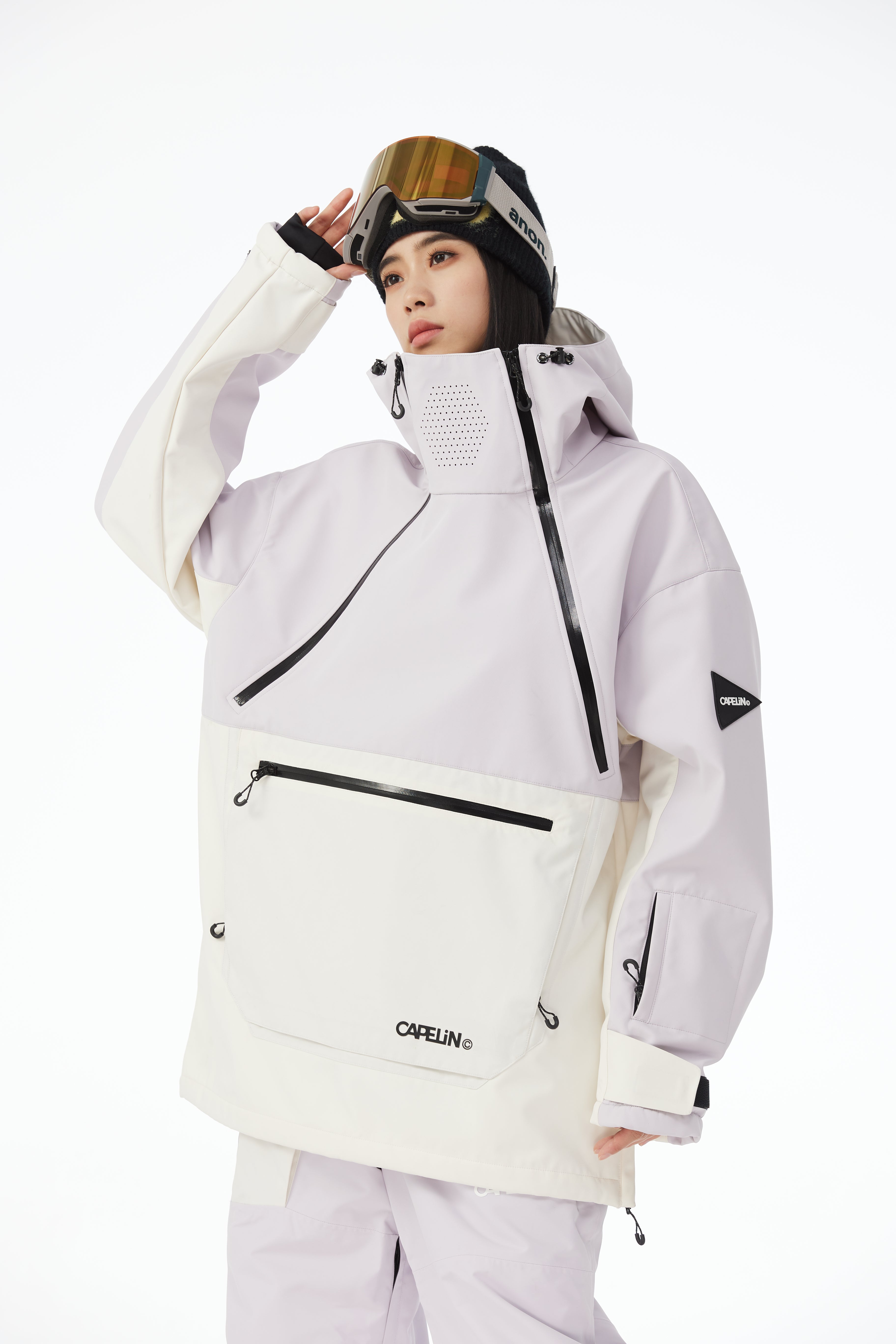
From the fabric perspective, the requirements of ski jackets are generally much higher than these of windbreakers. Now the windbreakers tend to be lightweight. The mature use of thermal bonding technology and the wide application of a large number of advanced fabrics have reduced the overall weight of windbreakers.
Compared with ski jackets, windbreakers are lighter and simpler in appearance. Compared with the windbreakers, the ski jacket emphasizes waterproofness and warmth retention.
Therefore, the fabric requirements for ski jackets are relatively high, and more materials are needed to improve the performance, such as thicker linings, and more fabric pressure coatings. Therefore, the ski jacket is relatively heavier on the whole and has a more complex appearance.
FAQ
Can I ski in a windbreaker, or do I really need a proper ski jacket?
A windbreaker may work in limited situations, but it is not built for full snow-sport protection. A ski jacket is designed for stronger waterproofing, better warmth retention, and more dependable performance in cold, wet, and windy mountain conditions.
Why does a ski jacket usually feel bulkier than a windbreaker?
Because a ski jacket usually includes more protective construction. Thicker lining, more technical shell materials, and additional weather-resistant design features all add weight, but they also make the jacket more suitable for snow use.
Is the biggest advantage of a ski jacket just extra warmth?
No. Warmth is only one part of the difference. A ski jacket is also built for better waterproof performance, more complete weather shielding, and a more specialized fit for cold, snowy environments than a standard windbreaker.