Most buying guides tell you to look for waterproof ratings, helmet-compatible hoods, and powder skirts — all useful, but none of it matters if you start with the wrong jacket construction. Before fit or features, every men's snowboard jacket falls into one of three fundamental categories: insulated, shell, or 3-in-1. Picking the wrong one is the reason riders end up either sweating through a hike to the park or shivering on a slow chairlift, no matter how technical the fabric is. This guide breaks down what separates the three, when each one makes sense, and how to match your choice to the way you actually ride — so you're shopping by function first and features second, rather than the other way around.
🔽 Quick Navigation
- 📌 Why Jacket Construction Matters as Much as Fit
- 📌 Insulated Jackets: Built-In Warmth for Cold Resort Days
- 📌 Shell Jackets: Maximum Versatility for Active Riders
- 📌 3-in-1 Jackets: Two Jackets in One
- 📌 At a Glance: Comparing the Three Construction Types
- 📌 Matching Construction Type to Your Riding Style
- 📌 FAQ
Why Jacket Construction Matters as Much as Fit

It's tempting to shop by waterproof rating or brand first, but construction type determines how a jacket actually behaves across a full day on the mountain. An insulated jacket builds warmth directly into the shell. A shell jacket carries no insulation at all, relying entirely on what you layer underneath. A 3-in-1 jacket splits the difference, combining a removable insulated liner with a separate waterproof shell. Each approach trades off warmth, breathability, and versatility differently — and getting this decision right upfront saves you from buying a second jacket for the shoulder season, or overheating every time you hike for a line.
This is also where riding style matters more than most riders expect. Two people standing at the same resort in the same weather can have completely different ideal setups: one spending most of the day riding chairlifts and cruising groomers, the other hiking laps in the park or ducking into sidecountry terrain. The first rider benefits from built-in warmth; the second generates far more body heat and needs a system that can vent or shed layers on demand. Understanding which category you fall into before you shop makes every other decision — fit, features, price — much easier to narrow down.
Insulated Jackets: Built-In Warmth for Cold Resort Days

An insulated snowboard jacket combines a waterproof, breathable outer shell with a layer of synthetic or down fill built directly into the garment. That means less thinking about layering — pair it with a base layer, and you're generally set for a cold day of lift-served riding. Synthetic insulation is the more common choice in snowboard-specific jackets because it keeps performing even when damp, unlike down, which loses loft and warmth if it gets wet.
The trade-off is versatility. Because the insulation is fixed, there's no way to shed warmth beyond opening zip vents, which makes insulated jackets a poor match for high-output days — think park laps or backcountry hikes — where you're likely to overheat. They shine on resort days in genuinely cold, dry climates, or for riders who tend to run cold and spend more time on the chairlift than moving.
Fill weight is worth paying attention to as well. Lighter synthetic fills (typically in the 60–100g range) suit milder resort climates or riders who run warm, while heavier fills (100–150g or more) are built for genuinely frigid, wind-exposed conditions. Many insulated jackets also use heavier fill through the core and lighter fill in the arms, since your torso loses heat faster than your limbs during long chairlift rides — a detail worth checking if you split time between very cold mornings and warmer afternoons.
Shell Jackets: Maximum Versatility for Active Riders

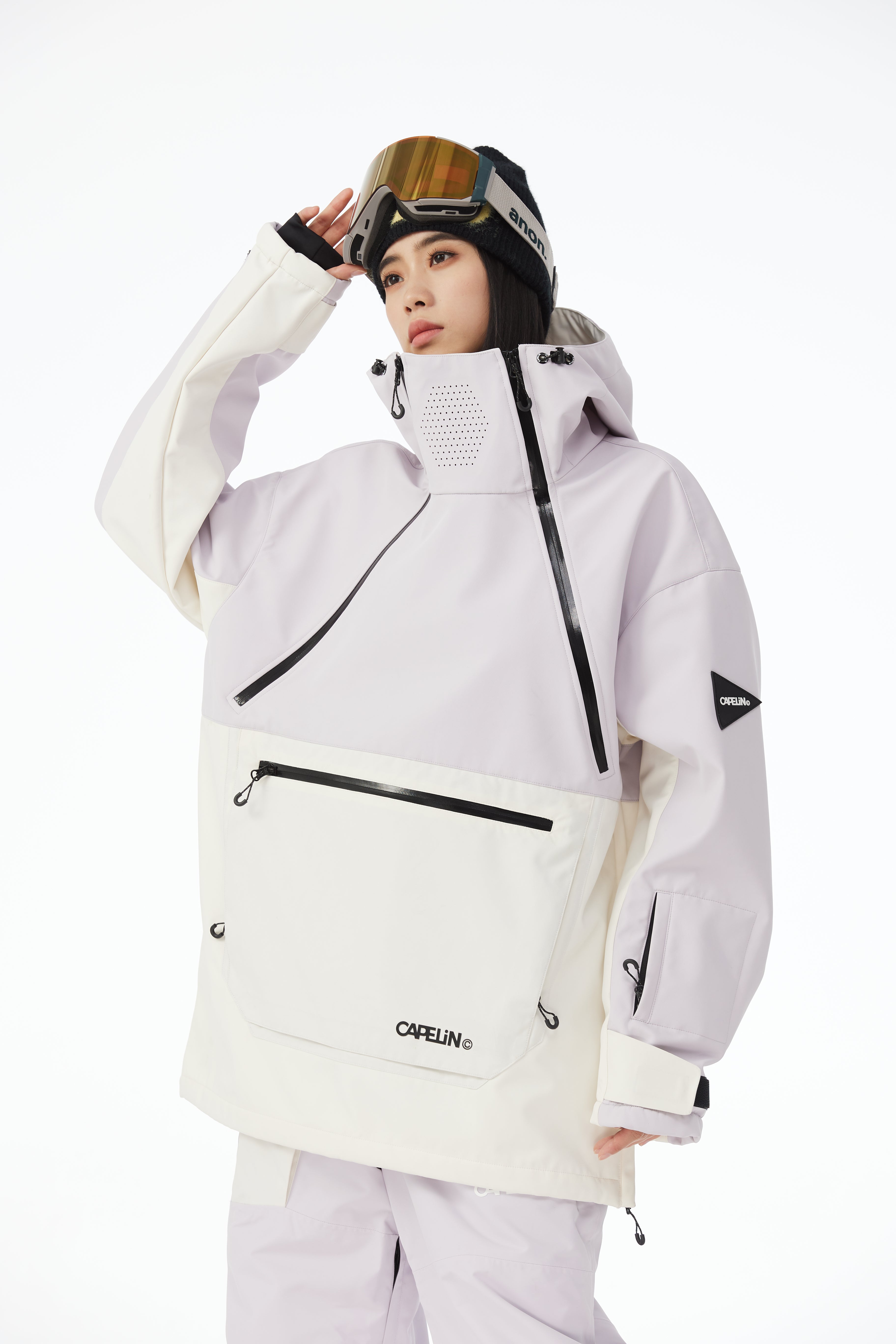
A shell jacket strips insulation out entirely, leaving a waterproof, windproof outer layer that depends on your base and mid-layers for warmth. That sounds like a downside, but for many riders it's the opposite: a shell adapts to a much wider range of conditions, since you can add or remove mid-layers as temperatures swing throughout the day or across the season. It's also the go-to choice for riders who hike into sidecountry terrain or spend time working hard in the park, where a fixed layer of insulation would quickly become uncomfortable.
Shells generally use higher-end waterproof-breathable membranes since breathability matters more when you're not relying on the jacket for warmth. According to breakdown of insulated outerwear, pairing an insulated mid-layer with a waterproof shell gives you the most flexibility of any setup — you can strip the shell entirely on bluebird days or add insulation as conditions demand, something a fixed insulated jacket simply can't do.
The other advantage of a shell is longevity across seasons and climates. Because warmth comes entirely from what you layer underneath, the same shell can work for a subzero powder day with a heavy mid-layer, or a mild spring afternoon with nothing more than a base layer underneath. That adaptability is a big part of why experienced riders who own multiple mid-layers often gravitate toward a shell as their primary jacket, reserving an insulated piece only for the coldest stretches of the season.
3-in-1 Jackets: Two Jackets in One

A 3-in-1 jacket system pairs a zip-in insulated liner with a separate waterproof shell, letting you wear either piece alone or zip them together for maximum warmth. On paper, it looks like the best of both worlds — one purchase that covers a cold resort morning and a mild spring afternoon. In practice, the trade-off is usually fit and performance: because the liner and shell are designed to work both together and apart, neither piece is typically cut or built to the same standard as a dedicated insulated jacket or a purpose-built shell.
Still, for riders who want one jacket to cover the widest range of conditions without managing separate mid-layers, a 3-in-1 offers genuine convenience — particularly for occasional riders or those building out a first full kit rather than optimizing for aggressive backcountry or park use. It's also a practical choice for anyone who splits time between snowboarding and other cold-weather activities, since the liner piece often doubles as a standalone jacket for everyday winter wear once the insulated layer is unzipped from the shell.
At a Glance: Comparing the Three Construction Types

None of these ratings are absolute — a high-fill insulated jacket in a mild climate can easily overheat its wearer, just as a shell with too little insulation underneath can leave a cold-running rider shivering on the lift. Use the table as a starting point, then weigh it against your own tolerance for cold, how much you move throughout a typical day, and how many other layering pieces you already own.
|
Construction |
Best For |
Warmth |
Breathability |
Packability |
|
Insulated |
Cold resort days, riders who run cold |
High, built-in |
Lower |
Low |
|
Shell |
Park laps, hiking, variable conditions |
Depends on layers |
High |
High |
|
3-in-1 |
Occasional riders, shoulder-season versatility |
Adjustable |
Moderate |
Moderate |
Matching Construction Type to Your Riding Style

The right choice ultimately comes down to how you actually spend your day on the mountain, not just the coldest temperature you might encounter. Resort riders who stick to lift-served terrain and run cold generally get the most out of an insulated jacket — you're moving less, exposed to wind on the chairlift, and less likely to overheat. Park riders and anyone hiking for backcountry lines tend to do better with a shell, layering a mid-layer fleece or insulated hoodie underneath and adjusting it as effort level changes throughout the day. If you're outfitting a full kit and want flexibility without buying two separate jackets, a 3-in-1 is a reasonable middle ground, especially paired with a proper base and mid-layer system — our guide on what to wear under a snowboard jacket walks through building that layering system from the skin out, regardless of which shell you end up choosing.
It's also worth factoring in your local climate rather than shopping purely by riding style. A park-focused rider in a consistently cold, dry region may still lean toward an insulated jacket for comfort during long lift lines, while an all-mountain rider in a milder, wetter climate might prefer a breathable shell year-round. There's no single right answer — only the setup that matches how much you move, how cold you run, and how often you're willing to adjust layers throughout the day.
Whichever construction type fits your riding style, pair it with matching gear from the full men's ski and snowboard wear collection built for the same conditions, and check the full range of options at capelin-crew before deciding — comparing waterproof ratings, venting, and fit side by side is the best way to avoid buying twice.
❓FAQ
Q1: Is an insulated jacket or a shell better for beginners?
For most beginners riding resort terrain, an insulated jacket is simpler — there's less layering to think about, and you're less likely to be moving fast enough to overheat. As your riding style becomes more active, or as you start hiking for lines or spending longer sessions in the park, a shell with a flexible layering system usually makes more sense and tends to be a better long-term investment.
Q2: Can I wear a shell jacket without any layers underneath?
Technically yes, but you'll have no insulation against the cold. Shells are designed to be paired with a base layer and mid-layer, and skipping those defeats the purpose of choosing a shell in the first place — you'd be trading away the warmth of an insulated jacket without gaining any of the versatility a shell is meant to offer.
Q3: Are 3-in-1 jackets worth the extra cost over buying a shell and mid-layer separately?
It depends on your priorities. A 3-in-1 typically costs less than buying two dedicated pieces and guarantees a matching fit between the liner and shell, but a separately purchased shell and insulated mid-layer usually perform better individually and offer more flexibility in mixing and matching with other layers you already own.
Q4: How do I know if a jacket is warm enough for extremely cold conditions?
Look at both the insulation type and fill weight if it's insulated, and check the waterproof/breathability rating regardless of construction type. For very cold, dry climates, an insulated jacket with a higher fill weight paired with a solid base layer is typically the safest choice, while riders in milder or wetter climates are usually better served by a shell and adjustable layering system.
Q5: Do park riders need a completely different jacket than all-mountain riders?
Not necessarily a different jacket, but often a different construction type. Park riders benefit more from a shell's breathability and flexible layering, since park sessions are higher-output than steady all-mountain cruising, and the ability to vent or shed a mid-layer mid-session matters more than built-in warmth.